No schools match that search. Try a city, country or course type.
Before you enrol
Choose the course for the work you want to do
A bridal artist, a beauty-counter adviser and a film prosthetics artist need overlapping foundations, but different amounts of specialist practice. Start with the services you want to provide in your first year of work. Then compare the hours spent learning those services, the assessment and the cost of reaching that level.
Bridal and event makeup
Look for consultation, skin preparation, colour matching, complete-face application, lashes, photography and timed practice. Ask how students adapt a reference to different faces and how often they work on someone other than themselves. If hair is part of your planned service, count its practical hours separately.
Fashion and editorial
Look for design briefs, face charts, collaboration with photographers and stylists, and experience adjusting makeup under lighting. Request examples of individual student portfolios. Establish who supplies the model, which images you receive and whether you can publish them with the required credits.
Film, theatre and effects
Look for continuity, character development, wigs, ageing, injury simulation and prosthetic application. Sculpting and mould-making need equipment and consumables that a beauty course may never use. Ask which techniques are taught hands-on and which appear only as demonstrations.
Personal makeup lessons
If you want to improve your own routine, a personal lesson may be enough. Bring your products and explain where you struggle: foundation shade, eye shape, eyeliner or making a look last. A professional diploma adds training for working on clients that you may not need.
Is there one best makeup school in the world?
There is no single, independently accepted world ranking of makeup schools. A strong choice for bridal and beauty work may not teach the screen makeup or prosthetics you want. Compare supervised practice hours, individual feedback, model access, the exact qualification, the full kit and examination costs, and recent student portfolios. The directory above compares schools by city, country and published course information; confirm current intakes and fees with each school before enrolling.
Compare taught hours, not just months
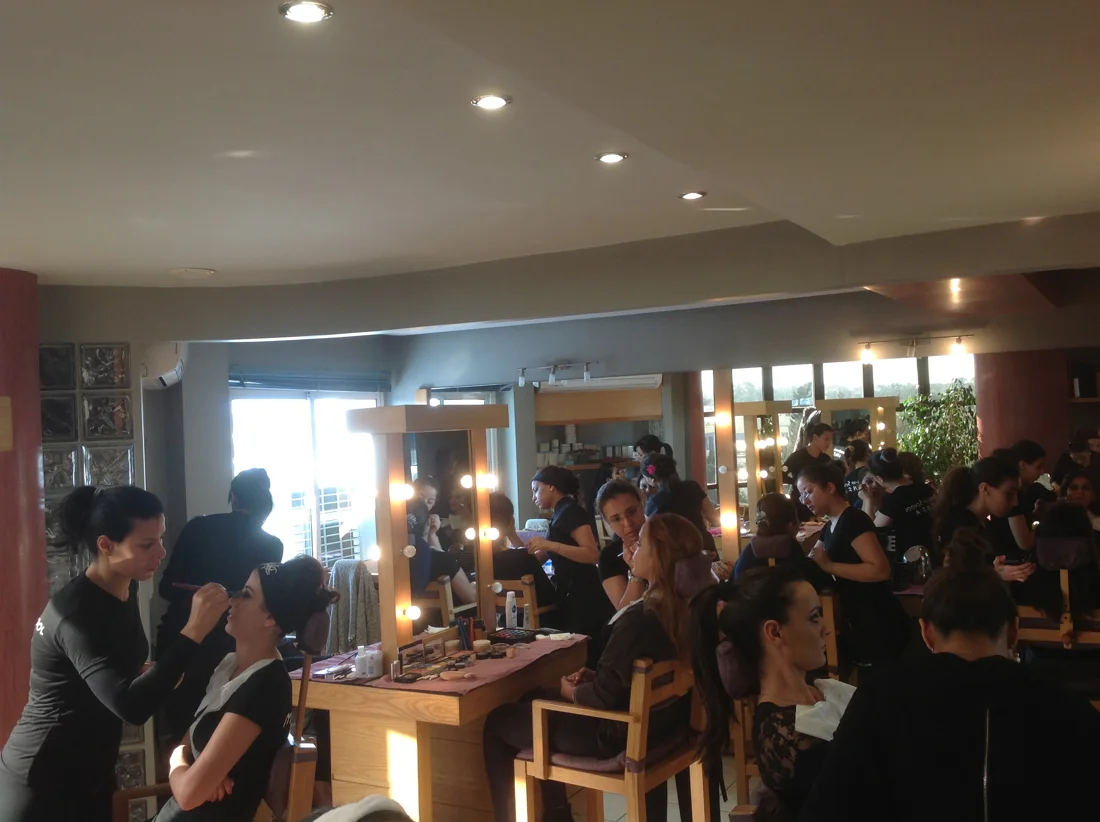
A three-month evening course can contain fewer supervised hours than a six-week intensive. Write down the number of classroom hours, independent hours and practice days. Then ask what happens during a typical class: tutor demonstration, paired practice, individual application and feedback each serve a different purpose.
Class size also changes the experience. Ask how many tutors are present during practical work, how long each application takes and how corrections are delivered. A small group is useful when it provides more individual feedback; the number alone does not prove that it does.
Understand the qualification
Ask the school to write the exact award on your quotation. An attendance certificate confirms participation; an assessed skills award requires specified work; a national vocational qualification follows its own framework; an undergraduate degree has academic requirements and a different scope. Words such as “master” and “international” in a course title do not, by themselves, establish a degree level or permission to work in another country.
Where a school names an awarding body or registration number, check the specific programme and campus with that body. Institutional recognition, a teacher’s personal qualification and approval for one course are different facts. Keep the current programme document with your enrolment agreement.
Build a complete budget
Keep prices in the school’s billing currency while comparing its charges. A conversion to dirhams is useful for planning, but the amount your bank debits depends on the exchange rate and transfer costs when you pay. Keep historical intake prices separate from a current written quote.
- Tuition: the full course, or every year if the programme is longer than one year.
- Registration and examinations: compulsory fees, deposits, final assessments and possible resit charges.
- Kit: brushes, cosmetics, tools, hair equipment and containers, with a clear distinction between loan equipment and items you own.
- Consumables: disposables, cleaning supplies, replacement products, prosthetic materials and project-specific purchases.
- Portfolio: models, studio sessions, photography, editing and permission to use the finished images.
- Attendance: accommodation, local transport, meals and travel for off-site work or placements.
Ask whether an instalment plan changes the total. A deposit credited to tuition should not be added twice. A kit’s advertised retail value is not a tuition discount unless the contract says so. For a multi-year course, request the rules for later-year increases.
Look closely at student work
View the full official gallery, then ask for projects from the course you are considering. Compare application on several faces, close views of edges and texture, and photographs with restrained retouching. For character work, look at design development and intermediate stages as well as the final image.
Check the credit on each photograph. Work by an instructor, a recent student and a graduate several years into their career tells you different things. A school campaign may be beautifully produced without showing what a beginner completes independently. Ask to see a recent assessment brief and the work submitted against it.
Visiting a school in Morocco
Arrange a visit during teaching hours, with the school’s agreement. Confirm the actual classroom address rather than relying on a registered office or salon reception. Check the journey at the time you would attend, particularly for evening classes or weekend travel between cities.
Ask which language is used for demonstrations, written materials and examinations. Clarify whether you must bring a model, how the school supplies models otherwise, and how missed practical sessions are recovered. If you work or care for family, request the full timetable before paying a reservation fee.
For a private course, request a dated invoice or quotation with the legal business name, course title, hours, fees and cancellation terms. For a public vocational route, use the current official programme and centre listing to confirm the intake. An older school page can describe a real course without establishing that applications are open now.
Applying abroad from Morocco
Ask admissions to confirm that the exact course accepts overseas applicants before paying for travel. Obtain the course dates, attendance pattern, teaching language, address and documents the school can issue. An admission offer and permission to enter or study in a country are separate decisions.
Use the destination government’s current immigration instructions for your circumstances. Do not rely on an academy’s general promise that a course is “international” to establish eligibility. If your ability to attend depends on an external decision, read the deposit and refund provisions before making a payment.
For online or blended training, check live-session time zones, kit delivery, model requirements and the location of examinations. A course with online lessons may still require several in-person assessments. Ask whether the school accepts locally sourced equivalent products before ordering a kit from overseas.
A message you can send to admissions
Hello, I am interested in [course] at your [city] campus for [intake]. Please send the full syllabus, supervised teaching hours, weekly timetable, entry requirements and exact qualification awarded. I would also like an itemised quote covering tuition, registration, examinations, kit, consumables and portfolio photographs. Please confirm the teaching language, model arrangements, classroom address, payment schedule and cancellation/refund terms. Could you share examples of recent student work from this course?
Add your experience level and the work you want to do. If you are applying from another country, say where you live and ask which documents the school can provide. Clear questions make it easier to compare the replies from two or three schools.